Montana Marinara: A Story of Partnerships, Practicality, and Place
30 Mar 2026
Locally grown vegetables like plump butternut squash, crisp carrots, and succulent onions are being whipped together with canned tomatoes in a large, stainless steel pot.
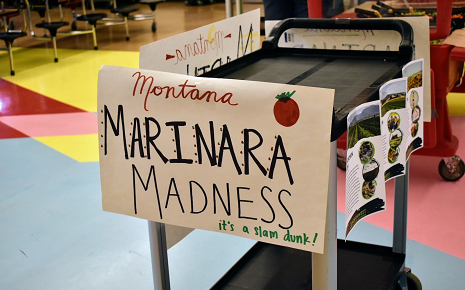
As the sauce emulsifies, it thickens, producing a rich, creamy, reddish-orange hue as it transforms into a savory marinara sauce that is processed and bottled at Mission Mountain Food Enterprise Center (MMFEC) in Ronan. The ingredients are simple, straightforward. The final product is a mouth-watering and versatile sauce that will be doled out over thick pasta noodles, meatball subs, and pizzas served in school cafeterias across the state.
Word on the street? Even picky-eaters have approved of the sauce, which is nutrient rich with ½ cup serving of red/orange vegetables in every ½ cup serving.
Connecting More Montanans with Montana-grown Food
“The idea for Montana Marinara was a longtime dream of a school foodservice director based in Missoula,” said Blake Lineweaver, Local Food Promotion Program Manager, Mission West Community Development Partners.
The director recognized the opportunity to combine Montana-grown ingredients with commodity tomatoes and paste sourced from the USDA Foods in Schools program in order to simplify his busy kitchen operations; bring down the price of often cost-prohibitive local foods by leveraging federal entitlement funds; and use his existing ordering and distribution platform to receive a Montana-made product.
In 2021, a team of partners with the perfect blend of resources and infrastructure came together to make this farm-to-school dream a reality.
MMFEC had an existing marinara recipe and the food processing infrastructure to prep ingredients and make the sauce. In partnership with the Montana Office of Public Instruction (OPI), the state agency facilitates orders with schools each spring then diverts the diced tomatoes and paste to MMFEC in October.
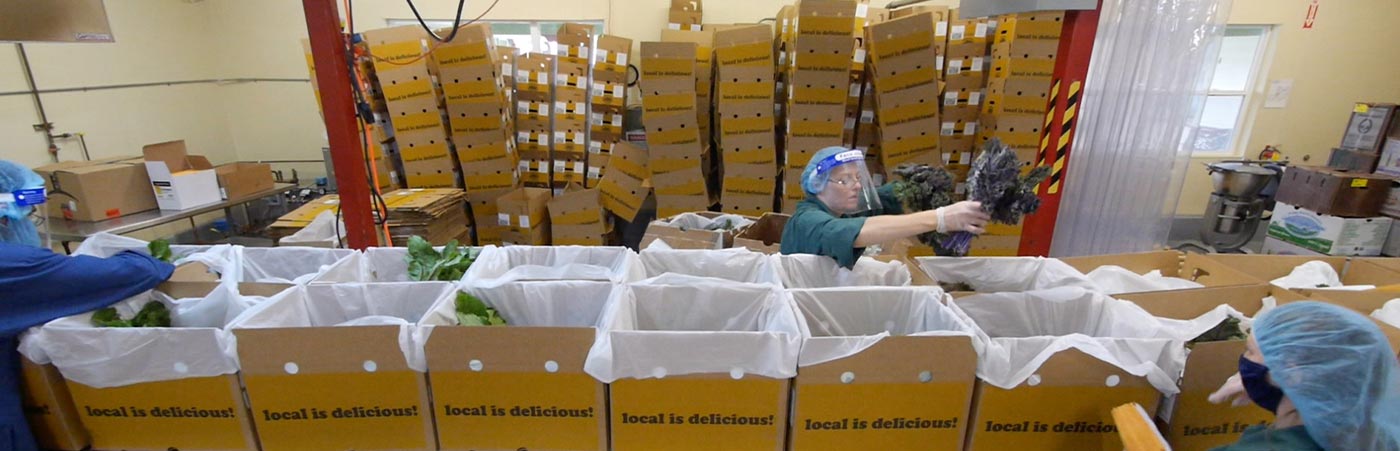
Here, they are combined with freshly harvested butternut squash, carrots, and onions sourced from the producer-owned Western Montana Growers Cooperative and their network of 30+ small, family-owned farms. The final product is then distributed to K-12 schools across the state through OPI.
Montana Marinara is now in its fourth year and continuing to innovate and build momentum. Thanks to a Regional Food Systems Infrastructure grant from the USDA Agricultural Marketing Service, the product moved from frozen to shelf-stable packaging as of school year 2025-2026 and bottling is now automated, significantly improving efficiency and safety. The sauce is packaged fresh with the capability to fill four larger bottles at a time, bringing more jobs to the production line.
Even better? Investments like these emphasize a growing need and desire to scale up value-added opportunities for locally-grown foods while connecting more folks with Montana producers and supporting our rural communities.
Continuing the Tradition of Farm-to-School Foods to Support Montana’s Farmers
The reaction to the sauce has been overwhelmingly positive, said Lineweaver.
“OPI Superintendent Hedalen said about the project, ‘The Montana Marinara program is a great example of how local partnerships can strengthen our schools and our agricultural communities. By bringing Montana-grown produce into school meals, we ensure students receive nutritious, high-quality food while supporting farmers and food producers across the state.’
In partnership with the Montana Office of Public Instruction and the Western Montana Growers Association, Mission West produced over 1,700 cases of the sauce for 143 school districts across Montana in 2026. The Montana Department of Agriculture and the Montana Department of Commerce are funding the project this year due to a lapse in federal support.
“We believe school lunches can change the way students eat in a positive way for the rest of their lives. Our goal is to build capacity for schools to instill good habits, values, and sense of place by educating students on the impacts of their food choices and introducing them to foods that they might not have at home,” said Lineweaver.
It also perfectly aligns with Mission West’s firm belief that developing the regional food economy is key to building vibrant and resilient rural communities.
For every dollar of profit made from Montana Marinara, $0.38 is returned directly to local farms. Nationally, the farmer receives only $0.15 of the food dollar according to most recent estimates by USDA.
“By providing schools with picky-eater-approved products featuring sustainably sourced ingredients, grown and processed right here in Montana, every purchase directly supports Montana farms, food hubs, and processors and celebrates our state’s history of supporting agriculture,” said Lineweaver.
More Topics